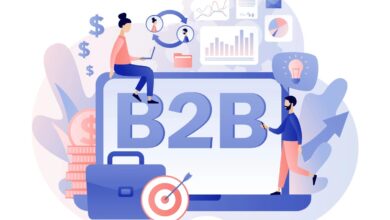
In today’s fast-evolving digital landscape, mastering B2B Prime isn’t just an option—it’s a necessity for businesses aiming to scale with precision and power. Discover how top companies leverage B2B Prime to unlock growth, boost efficiency, and outpace competitors.



What Is B2B Prime and Why It Matters

The term B2B Prime has emerged as a game-changer in the world of business-to-business operations. While not an officially branded service like Amazon Prime, B2B Prime refers to a premium-tier model that enhances the B2B transaction experience through faster delivery, exclusive pricing, dedicated support, and data-driven insights. It’s a strategic evolution of traditional B2B commerce, designed to meet the rising expectations of modern enterprise buyers.
Defining B2B Prime in Modern Commerce
B2B Prime is not a one-size-fits-all solution but a conceptual framework adopted by leading platforms and suppliers to elevate their service offerings. It mirrors the convenience and reliability of consumer-focused prime services but is tailored for complex business procurement needs. Think of it as a value-added layer on top of standard B2B transactions—offering predictability, scalability, and trust.
- Accelerated order fulfillment and logistics
- Priority customer service and account management
- Exclusive access to bulk pricing and early product releases
Platforms like Amazon Business have pioneered this model with their Amazon Business Prime, setting a benchmark for what B2B Prime can achieve. This service allows businesses to enjoy free two-day shipping, volume pricing, and business-only pricing—features that directly translate into operational efficiency.
The Evolution from Traditional B2B to B2B Prime
Traditional B2B models often involved lengthy procurement cycles, manual ordering, and inconsistent delivery timelines. The shift toward B2B Prime reflects a broader digital transformation in enterprise purchasing. With the rise of e-procurement tools, AI-driven recommendations, and integrated supply chain systems, businesses now expect the same speed and simplicity they experience as consumers.
This evolution is fueled by data. According to a McKinsey report, 73% of B2B buyers now prefer digital self-service options, and 40% are willing to spend over $50,000 in a single online transaction. B2B Prime caters to this shift by offering a frictionless, transparent, and reliable purchasing experience.
“The future of B2B isn’t just about selling products—it’s about delivering an experience. B2B Prime is the bridge between transactional efficiency and strategic partnership.” — Gartner Analyst, 2023
Key Features That Define B2B Prime
What sets B2B Prime apart from standard B2B services? The answer lies in its core features—each designed to reduce friction, increase loyalty, and drive long-term value. These features are not just perks; they are strategic differentiators that influence purchasing decisions at the enterprise level.
Priority Shipping and Guaranteed Delivery
One of the most tangible benefits of B2B Prime is expedited shipping. In industries where downtime costs thousands per hour—like manufacturing or healthcare—receiving critical parts or supplies within 24–48 hours can be a game-changer. B2B Prime programs often guarantee delivery windows, provide real-time tracking, and offer proactive delay notifications.
- Free two-day or same-day shipping on eligible orders
- Guaranteed delivery SLAs (Service Level Agreements)
- Integration with ERP and inventory management systems for automated reordering
For example, FedEx Business Services offers premium shipping tiers that align with B2B Prime principles, ensuring that high-priority shipments are handled with urgency and precision.
Exclusive Pricing and Volume Discounts
B2B Prime members often gain access to tiered pricing models that reward loyalty and scale. These pricing structures go beyond simple bulk discounts—they include dynamic pricing based on order history, seasonal demand, and supplier relationships.
Key advantages include:
- Automated volume-based pricing tiers
- Early access to promotional deals and flash sales
- Custom contracts with negotiated rates
This transparency and predictability help procurement teams forecast budgets more accurately and reduce maverick spending.
Dedicated Account Management and Support
Unlike standard B2B accounts, B2B Prime subscribers often receive personalized support from dedicated account managers. These professionals act as strategic partners, helping clients optimize their purchasing behavior, resolve issues proactively, and access exclusive resources.
Support features may include:
- 24/7 priority customer service hotlines
- Onboarding and training for new team members
- Quarterly business reviews (QBRs) to assess performance and ROI
Companies like Cisco offer Prime-level support packages that include SLA-backed response times and technical escalation paths, ensuring minimal disruption to operations.
How B2B Prime Transforms Customer Experience
The true power of B2B Prime lies in its ability to transform the customer experience from transactional to relational. In a world where buyers have more control than ever, experience is the new battleground for loyalty and retention.
From Friction to Flow: Streamlining the Buying Journey
Traditional B2B purchasing often involves multiple stakeholders, approval workflows, and manual data entry. B2B Prime simplifies this through integrated digital platforms that automate approvals, sync with accounting software, and offer one-click reordering.
For instance, platforms like Shopify Business enable companies to set up branded storefronts with Prime-like features, including saved payment methods, purchase order automation, and real-time inventory updates.
- Single sign-on (SSO) for secure access
- AI-powered product recommendations based on past orders
- Mobile-optimized ordering for on-the-go procurement
This seamless flow reduces the time-to-purchase and minimizes human error, leading to higher satisfaction and fewer abandoned carts.
Building Trust Through Reliability and Transparency
Trust is earned through consistency. B2B Prime builds trust by delivering on promises—whether it’s on-time delivery, accurate invoicing, or responsive support. Transparency in pricing, shipping costs, and return policies further strengthens this trust.
Key trust-building elements include:
- Clear breakdown of all fees and taxes
- Real-time order status dashboards
- Transparent return and refund policies
A Salesforce study found that 88% of B2B customers say trust is a key factor in their purchasing decisions. B2B Prime programs that prioritize transparency are more likely to retain clients and generate referrals.
“In B2B, trust isn’t built in a day—it’s built with every on-time delivery, every resolved ticket, and every transparent invoice.”
Leveraging B2B Prime for Competitive Advantage
Adopting B2B Prime isn’t just about keeping up with trends—it’s about gaining a strategic edge. Companies that implement or partner with B2B Prime services often see measurable improvements in customer retention, order frequency, and average order value.
Increasing Customer Lifetime Value (CLV)
B2B Prime directly impacts CLV by encouraging repeat purchases and reducing churn. When customers experience consistent value—through fast shipping, exclusive deals, and personalized service—they are less likely to switch to competitors.
Strategies to boost CLV with B2B Prime include:
- Offering loyalty points or rewards for frequent orders
- Providing early access to new products for Prime members
- Creating tiered membership levels (e.g., Prime, Prime Pro, Enterprise Prime)
For example, UPS Supply Chain Solutions offers premium logistics tiers that increase client stickiness by delivering measurable ROI on shipping efficiency.
Reducing Operational Costs and Improving Efficiency
While B2B Prime may involve upfront investment in technology or logistics, the long-term operational savings are significant. Automated ordering reduces administrative overhead, while predictive analytics help prevent stockouts and overstocking.
Efficiency gains include:
- Reduced time spent on manual purchase approvals
- Lower inventory carrying costs due to just-in-time delivery
- Fewer emergency shipments thanks to reliable lead times
A case study by IBM showed that companies using intelligent B2B platforms reduced procurement cycle times by up to 60%, directly contributing to cost savings.
B2B Prime in Action: Real-World Case Studies
Theoretical benefits are compelling, but real-world results are even more convincing. Let’s explore how leading companies have successfully implemented B2B Prime strategies to drive growth and customer satisfaction.
Amazon Business Prime: Redefining Enterprise Procurement
Amazon Business, launched in 2015, has become a dominant force in B2B e-commerce. Its Prime offering—Amazon Business Prime—provides businesses with free two-day shipping on millions of products, business-only pricing, and multi-user accounts with spending controls.
Key achievements:
- Over 5 million businesses served globally
- 200% year-over-year growth in Prime membership sign-ups (2022–2023)
- Integration with SAP, Oracle, and Coupa for seamless procurement
One mid-sized manufacturing firm reported a 35% reduction in procurement time after switching to Amazon Business Prime, citing the ease of reordering MRO (Maintenance, Repair, and Operations) supplies as a major factor.
Cisco Plus: A Subscription-Based B2B Prime Model
Cisco’s entry into the B2B Prime space came with Cisco Plus—a subscription service that bundles hardware, software, and support into a single, predictable cost. This model aligns with Prime principles by offering continuous value, proactive maintenance, and priority support.
Benefits for customers include:
- Access to the latest technology through regular upgrades
- 24/7 technical support with guaranteed response times
- Security and compliance monitoring included
According to Cisco, over 60% of new enterprise deals in 2023 included a Cisco Plus subscription, indicating strong market acceptance of the Prime-like model.
“Cisco Plus isn’t just a product—it’s a promise. A promise of reliability, innovation, and partnership.” — Cisco CEO, Chuck Robbins
Challenges and Considerations in Implementing B2B Prime
While the benefits of B2B Prime are clear, implementation is not without challenges. Companies must carefully evaluate their infrastructure, customer needs, and long-term strategy before launching a Prime-like program.
Logistical and Operational Hurdles
Offering fast, reliable shipping at scale requires robust logistics infrastructure. Many companies underestimate the complexity of fulfilling Prime-level promises, especially when dealing with global supply chains.
Common logistical challenges include:
- Managing inventory across multiple warehouses
- Integrating with third-party carriers for last-mile delivery
- Handling returns and reverse logistics efficiently
To overcome these, businesses often partner with logistics providers like DHL or invest in warehouse automation technologies.
Pricing and ROI: Is B2B Prime Worth the Investment?
One of the biggest concerns for businesses is whether the cost of offering B2B Prime features—such as free shipping or dedicated support—will outweigh the benefits. The answer depends on customer lifetime value and retention rates.
Key considerations:
- Will Prime members spend more over time?
- Can operational efficiencies offset service costs?
- Is there a clear path to monetizing the Prime tier (e.g., subscription fees)?
A Deloitte analysis found that companies with premium B2B service tiers saw a 25% higher gross margin due to increased customer loyalty and reduced churn.
Future Trends Shaping B2B Prime
The B2B Prime model is not static—it’s evolving alongside technology, buyer behavior, and global economic trends. Staying ahead requires foresight and adaptability.
AI and Predictive Analytics in B2B Prime
Artificial intelligence is set to revolutionize B2B Prime by enabling hyper-personalization and predictive ordering. AI can analyze historical data to forecast when a customer will need to reorder, automatically trigger purchases, and suggest complementary products.
Applications include:
- Smart replenishment systems that sync with inventory levels
- Chatbots providing instant support and order tracking
- Dynamic pricing engines that adjust based on demand and supply
Companies like Siemens are already using AI-driven platforms to offer predictive maintenance and supply recommendations to industrial clients.
Sustainability and Ethical Sourcing in B2B Prime
As corporate responsibility becomes a priority, B2B Prime programs are incorporating sustainability metrics. Buyers now expect transparency in carbon footprint, ethical sourcing, and packaging waste.
Emerging trends include:
- Carbon-neutral shipping options for Prime members
- Supplier scorecards based on ESG (Environmental, Social, Governance) criteria
- Reusable or recyclable packaging mandates
A PwC survey revealed that 72% of B2B buyers consider sustainability when choosing suppliers—making it a key differentiator in Prime-tier offerings.
How to Launch Your Own B2B Prime Program
Ready to launch your own B2B Prime initiative? It starts with a clear strategy, the right technology, and a customer-centric mindset.
Step 1: Assess Your Customer Needs and Readiness
Not every business needs a full-fledged B2B Prime program. Begin by surveying your existing clients to understand their pain points and willingness to pay for premium services.
- Conduct customer interviews and feedback sessions
- Analyze order frequency, average order value, and support tickets
- Identify high-value clients who could benefit most from Prime features
This data will help you design a program that delivers real value, not just perceived perks.
Step 2: Build the Right Technology Stack
A successful B2B Prime program relies on integrated technology. You’ll need an e-commerce platform, CRM, ERP integration, and analytics tools to deliver a seamless experience.
Recommended tools:
- Magento or Shopify Plus for B2B e-commerce
- Salesforce or HubSpot for CRM and customer support
- Zuora or Chargebee for subscription management
Ensure your platform supports features like bulk ordering, purchase approvals, and custom pricing.
Step 3: Launch, Measure, and Optimize
Start with a pilot program for a select group of clients. Monitor key metrics like adoption rate, order volume, and customer satisfaction. Use feedback to refine your offering before a full rollout.
- Track customer retention and CLV changes
- Measure operational costs vs. revenue uplift
- Iterate based on user behavior and feedback
Continuous optimization ensures your B2B Prime program remains relevant and valuable.
What is B2B Prime?
B2B Prime refers to a premium-tier business-to-business service model that offers enhanced benefits such as fast shipping, exclusive pricing, dedicated support, and data-driven insights. It’s designed to improve the efficiency and experience of enterprise procurement.
How does B2B Prime differ from regular B2B services?
Unlike standard B2B services, B2B Prime includes value-added features like guaranteed delivery, volume discounts, priority support, and integrated digital tools. It focuses on reducing friction and building long-term customer relationships.
Is B2B Prime only for large enterprises?
No, B2B Prime can benefit businesses of all sizes. Small and mid-sized companies can leverage Prime-like services through platforms like Amazon Business or by partnering with suppliers that offer premium tiers.
Can B2B Prime improve customer retention?
Yes, B2B Prime significantly improves retention by delivering consistent value, reliability, and personalized service. Customers are more likely to stay loyal when they experience tangible benefits from their supplier relationship.
What industries benefit most from B2B Prime?
Industries with high procurement volumes and time-sensitive needs—such as manufacturing, healthcare, technology, and logistics—benefit the most from B2B Prime. However, any sector with complex supply chains can gain from its efficiencies.
As the B2B landscape becomes increasingly digital and competitive, B2B Prime is no longer a luxury—it’s a strategic imperative. By offering faster delivery, exclusive pricing, and superior support, companies can build stronger relationships, reduce costs, and drive sustainable growth. Whether you’re a supplier looking to launch a Prime program or a buyer seeking better procurement solutions, understanding and leveraging B2B Prime is key to staying ahead. The future of B2B commerce is fast, frictionless, and focused on value—and B2B Prime is leading the way.
Further Reading: