Ever wondered what ‘b2b meaning’ really is? It’s more than just business jargon—it’s the backbone of global commerce. Let’s break it down in simple, powerful terms.




B2B Meaning: The Core Definition and Why It Matters

At its heart, the b2b meaning refers to ‘business-to-business’—a transaction model where one business sells products or services to another. Unlike B2C (business-to-consumer), B2B focuses on solving business problems, not individual needs. This distinction shapes everything from marketing strategies to sales cycles.
What Does B2B Stand For?
B2B stands for ‘Business-to-Business’. It describes commercial transactions between two or more companies. For example, a software company selling CRM tools to an enterprise, or a packaging supplier providing materials to a food manufacturer. These relationships are often long-term and based on contracts, bulk orders, and negotiated pricing.
- Transactions occur between legal entities, not individuals.
- Decision-making is usually complex and involves multiple stakeholders.
- Value is often measured in efficiency, ROI, and scalability.
“B2B is not just about selling; it’s about building partnerships that drive mutual growth.” — Harvard Business Review, The Future of B2B Sales
How B2B Differs from B2C
Understanding the b2b meaning requires contrasting it with B2C. While B2C targets emotions and immediate needs, B2B appeals to logic, cost-efficiency, and long-term value. A consumer might buy a laptop for personal use after a quick online review, but a company purchasing 100 laptops will evaluate vendors, request demos, negotiate service level agreements (SLAs), and assess total cost of ownership.
- B2B sales cycles are longer and involve more decision-makers.
- B2C marketing uses emotional triggers; B2B relies on data and case studies.
- B2B pricing is often customized, while B2C is usually fixed.
7 Key Characteristics of B2B Transactions
The b2b meaning becomes clearer when we examine its defining traits. These characteristics shape how companies operate, market, and sell in the B2B space.
1. Complex Decision-Making Process
In B2B, purchases are rarely made by a single person. A buying committee may include procurement officers, technical evaluators, financial analysts, and C-suite executives. This complexity means sales teams must tailor their messaging to each stakeholder.
- Technical teams care about integration and security.
- Finance teams focus on ROI and budget alignment.
- Executives look for strategic impact and scalability.
2. Longer Sales Cycles
Unlike B2C, where a customer might buy instantly, B2B sales can take weeks or months. The process often includes needs assessment, vendor comparison, proof of concept, contract negotiation, and approval workflows.
- According to Salesforce’s State of Sales Report, the average B2B sales cycle is 2-6 months.
- Some enterprise deals can last over a year.
- Content marketing and nurturing campaigns are crucial during this phase.
3. Higher Transaction Values
B2B transactions typically involve larger sums. A company might spend thousands or even millions on software licenses, machinery, or consulting services. This justifies the need for thorough due diligence.
- Volume discounts and tiered pricing are common.
- Contracts often include service-level agreements (SLAs).
- Payment terms may be net-30, net-60, or longer.
Types of B2B Business Models Explained
The b2b meaning extends beyond a simple definition—it encompasses various business models that serve different market needs. Understanding these models helps companies position themselves effectively.
1. Manufacturers Selling to Wholesalers or Distributors
This is one of the oldest B2B models. A manufacturer produces goods and sells them in bulk to wholesalers or distributors, who then supply retailers or other businesses.
- Example: A steel mill selling to a construction equipment manufacturer.
- Focus is on production capacity, quality control, and logistics.
- Relationships are often long-term and contract-based.
2. Software as a Service (SaaS) for Enterprises
SaaS has revolutionized B2B. Companies like Salesforce, Slack, and Zoom offer cloud-based tools that businesses subscribe to. The model is scalable, recurring, and data-driven.
- Revenue is predictable due to subscription models.
- Customer success teams play a key role in retention.
- Integration with existing systems is a major selling point.
“SaaS has turned software from a product into a service, reshaping the b2b meaning in the digital age.” — Gartner on SaaS
3. Freelancers and Agencies Serving Businesses
Independent professionals and agencies offer specialized services like marketing, legal advice, or IT support to other businesses. This model is flexible and expertise-driven.
- Common in digital marketing, design, and consulting.
- Projects are often milestone-based with clear deliverables.
- Platforms like Upwork and Toptal facilitate these connections.
How B2B Marketing Works: Strategies That Drive Results
Marketing in the B2B space is fundamentally different from B2C. The b2b meaning influences every aspect of how companies attract and convert leads.
Content Marketing: The Foundation of B2B Strategy
B2B buyers are informed and research-heavy. They consume whitepapers, case studies, webinars, and blog posts before engaging with sales. Content marketing builds trust and positions a brand as an authority.
- Top-performing content includes ROI calculators and industry benchmarks.
- SEO is critical for visibility in niche markets.
- Long-form content (2,000+ words) performs better in B2B.
Account-Based Marketing (ABM)
ABM is a strategic approach where marketing and sales teams collaborate to target high-value accounts with personalized campaigns. Instead of casting a wide net, ABM focuses on a few key prospects.
- Used by companies like Adobe and Oracle.
- Combines personalized emails, direct mail, and social selling.
- According to ABM Institute, 87% of marketers report higher ROI with ABM.
Digital Advertising and Lead Generation
Paid ads on LinkedIn, Google, and industry-specific platforms help generate qualified leads. Unlike B2C ads, B2B ads focus on job titles, company size, and industry.
- LinkedIn is the top platform for B2B lead generation.
- Landing pages are optimized for lead capture, not immediate sales.
- Lead scoring helps prioritize follow-ups.
The Role of Technology in Modern B2B Operations
Technology has redefined the b2b meaning by enabling faster, smarter, and more scalable business interactions. From CRM systems to AI-driven analytics, tech is at the core of B2B success.
Customer Relationship Management (CRM) Systems
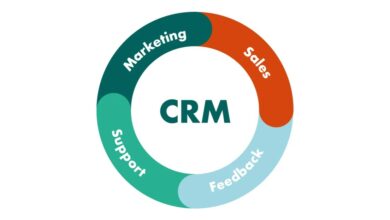
CRMs like Salesforce, HubSpot, and Zoho help manage interactions with current and potential clients. They track communication, sales pipelines, and customer data in one place.
- Automates follow-ups and task reminders.
- Provides insights into customer behavior and sales performance.
- Integrates with email, calendars, and marketing tools.
Automation and AI in B2B
AI tools are transforming B2B operations by automating repetitive tasks, predicting customer behavior, and personalizing outreach at scale.
- Chatbots handle initial inquiries on B2B websites.
- Predictive analytics identify high-intent leads.
- Natural language processing (NLP) improves email personalization.
“AI is not replacing B2B salespeople—it’s empowering them to focus on high-value activities.” — McKinsey on AI in B2B
E-Commerce Platforms for B2B
Traditional B2B relied on phone calls and emails. Today, B2B e-commerce platforms like Alibaba, Amazon Business, and Shopify B2B allow companies to browse, compare, and purchase online—just like consumers.
- Features include bulk pricing, custom catalogs, and purchase approval workflows.
- Mobile optimization is increasingly important.
- Integration with ERP systems ensures seamless order processing.
B2B Meaning in Global Trade and Supply Chains
The b2b meaning is especially relevant in global trade, where cross-border transactions form the backbone of supply chains. Companies depend on international B2B relationships to source materials, manufacture goods, and distribute products.
Global Sourcing and Procurement
Many businesses source raw materials or components from overseas suppliers. This requires navigating tariffs, logistics, quality standards, and cultural differences.
- Example: An American carmaker sourcing tires from a factory in Thailand.
- Procurement teams use RFPs (Requests for Proposal) to evaluate vendors.
- Long-term contracts reduce supply chain risks.
Impact of Geopolitical Factors
Trade wars, sanctions, and pandemics can disrupt B2B supply chains. Companies must build resilience through diversification and digital tracking.
- The US-China trade war impacted thousands of B2B contracts.
- Blockchain is being used to increase transparency in supply chains.
- Local sourcing is gaining traction as a risk mitigation strategy.
Digital Marketplaces in International B2B
Platforms like Alibaba and Global Sources connect buyers and suppliers worldwide. These marketplaces reduce friction in international B2B transactions.
- Buyers can request samples and negotiate prices online.
- Escrow services protect both parties in cross-border deals.
- AI-powered translation tools break language barriers.
Future Trends Shaping the B2B Meaning
The b2b meaning is evolving rapidly due to technological, economic, and behavioral shifts. Staying ahead requires understanding these emerging trends.
Rise of Subscription-Based B2B Models
More B2B companies are adopting subscription models, even for physical products. This creates predictable revenue and deeper customer relationships.
- Examples: SaaS, equipment leasing, and managed services.
- Customers prefer OpEx (operating expense) over CapEx (capital expense).
- Churn rate becomes a critical metric.
Increased Focus on Customer Experience (CX)
B2B buyers now expect the same seamless experience as B2C. Poor UX, slow response times, or lack of self-service options can cost deals.
- Companies are investing in customer portals and knowledge bases.
- Net Promoter Score (NPS) is used to measure satisfaction.
- Post-sale support is as important as pre-sale marketing.
Sustainability and Ethical Sourcing in B2B
Businesses are under pressure to operate sustainably. B2B partners are evaluated not just on price and quality, but on environmental and social impact.
- Example: A tech company choosing a cloud provider with carbon-neutral data centers.
- ESG (Environmental, Social, Governance) criteria are part of vendor assessments.
- Transparency in supply chains is non-negotiable.
What is the basic b2b meaning?
The basic b2b meaning is ‘business-to-business’—a commercial transaction between two companies, where one provides products or services to another. It’s distinct from B2C and involves longer sales cycles, higher value deals, and complex decision-making.
How does b2b meaning apply to digital marketing?
In digital marketing, the b2b meaning shapes strategies like content marketing, account-based marketing, and LinkedIn advertising. The focus is on generating qualified leads through educational content and personalized outreach, rather than mass appeal.
What are common examples of b2b meaning in action?
Common examples include a software company selling to enterprises, a manufacturer supplying parts to another factory, or a marketing agency offering services to a retail chain. These relationships are often long-term and contract-based.
Is e-commerce only for B2C, or does b2b meaning include online sales?
B2B absolutely includes e-commerce. Platforms like Amazon Business, Alibaba, and specialized B2B marketplaces enable companies to buy and sell online. Features like bulk pricing, custom catalogs, and approval workflows make B2B e-commerce efficient.
How is the b2b meaning changing with technology?
Technology is transforming the b2b meaning through automation, AI, and digital platforms. Sales cycles are faster, customer expectations are higher, and data-driven decisions are the norm. The future of B2B is digital-first, experience-driven, and sustainable.
The b2b meaning is far more than a simple acronym—it’s a dynamic ecosystem that powers global commerce. From manufacturing to SaaS, from supply chains to digital marketing, B2B shapes how businesses grow and innovate. As technology evolves and customer expectations rise, understanding the depth of B2B relationships becomes crucial for long-term success. Whether you’re a startup or an enterprise, mastering the principles of B2B can unlock new opportunities and drive sustainable growth.
Further Reading: