Welcome to the dynamic world of B2B companies, where relationships drive revenue and strategy shapes success. In this comprehensive guide, we’ll explore what makes these businesses thrive, the trends reshaping their future, and actionable insights to fuel growth.





What Are B2B Companies and How Do They Work?

B2B companies—short for business-to-business—are organizations that sell products or services to other businesses rather than individual consumers. This model underpins much of the global economy, from software providers to industrial manufacturers. Unlike B2C (business-to-consumer) models, B2B transactions often involve longer sales cycles, higher order values, and complex decision-making units.
The Core Definition of B2B Companies
At its essence, a B2B company operates by providing goods or services that help another business function, grow, or deliver value to its own customers. For example, a cloud computing provider like Amazon Web Services serves other tech firms, e-commerce platforms, and enterprises by offering scalable infrastructure.
- Sales are typically relationship-driven and contract-based.
- Customers are often other organizations, not individuals.
- Value is measured in efficiency, ROI, and long-term partnership potential.
“B2B isn’t just about selling to businesses—it’s about solving their problems at scale.” — Industry Analyst, McKinsey & Company
Types of B2B Business Models
Not all B2B companies operate the same way. There are several distinct models, each with unique characteristics:
- Manufacturers: Produce goods sold to wholesalers, retailers, or other manufacturers (e.g., Siemens supplying industrial components).
- Wholesalers and Distributors: Buy in bulk and resell to retailers or smaller businesses (e.g., Grainger in industrial supplies).
- Service Providers: Offer expertise such as consulting, IT support, or logistics (e.g., Deloitte, FedEx).
- SaaS (Software as a Service): Deliver software solutions on a subscription basis (e.g., Salesforce, HubSpot).
Understanding your model is critical for tailoring marketing, sales, and customer success strategies effectively.
Key Characteristics That Define Successful B2B Companies
While B2B companies vary widely in size and sector, the most successful ones share common traits that set them apart. These characteristics aren’t accidental—they’re cultivated through strategic planning, customer focus, and operational excellence.
Long Sales Cycles and Relationship Building
One of the defining features of B2B companies is the extended time it takes to close a deal. Unlike B2C purchases, which can be impulsive, B2B decisions often require approval from multiple stakeholders, technical evaluations, and legal reviews.
- Average sales cycle can range from 30 to 180+ days.
- Relationships are nurtured through consistent communication and trust-building.
- Content marketing, demos, and case studies play a crucial role in guiding prospects.
For instance, a company like Oracle may spend months engaging with a potential enterprise client before finalizing a database licensing agreement.
High Customer Lifetime Value (CLV)
B2B companies often enjoy higher customer lifetime value due to recurring revenue models, long-term contracts, and upsell opportunities. A single client can generate millions in revenue over several years.
- SaaS platforms like Zoom or Slack benefit from per-user pricing and expansion over time.
- Maintenance contracts in manufacturing add predictable revenue streams.
- Consulting firms deepen engagement through phased project rollouts.
“In B2B, the first sale is just the beginning of the relationship.” — Forbes Insights Report
Complex Decision-Making Units
Unlike B2C, where one person might make a purchase decision, B2B sales involve committees. These can include procurement officers, technical evaluators, financial analysts, and C-suite executives.
- Marketing must address multiple personas with tailored messaging.
- Sales teams need to map stakeholder influence and pain points.
- Content must speak to both emotional and rational drivers across roles.
This complexity demands a sophisticated approach to lead nurturing and account-based marketing (ABM).
Top Industries Dominated by B2B Companies
B2B activity spans nearly every sector of the economy. However, some industries are particularly reliant on business-to-business transactions. Understanding these sectors helps identify growth opportunities and competitive landscapes.
Information Technology and Software
The IT sector is one of the fastest-growing areas for B2B companies. From cybersecurity to enterprise resource planning (ERP), software solutions are essential for modern business operations.
- Cloud services like Microsoft Azure and Google Cloud dominate infrastructure.
- CRM platforms such as Salesforce streamline sales and customer management.
- AI-powered tools are increasingly used for data analytics and automation.
According to Gartner, global IT spending is projected to reach $4.7 trillion in 2024, with a significant portion driven by B2B demand.
Manufacturing and Industrial Supply
Manufacturing remains a cornerstone of the B2B economy. Companies in this space produce machinery, raw materials, and components used by other businesses.
- Automotive suppliers like Bosch provide parts to car manufacturers.
- Steel producers sell to construction and engineering firms.
- 3D printing companies serve aerospace and medical device industries.
These businesses often rely on just-in-time inventory systems, making supply chain reliability critical.
Professional Services and Consulting
Many B2B companies offer expertise rather than physical products. This includes legal, financial, marketing, and management consulting services.
- Firms like PwC and KPMG advise on compliance, tax, and digital transformation.
- Digital agencies help brands build websites, run ad campaigns, and optimize SEO.
- HR consultants assist with talent acquisition and organizational development.
The value here lies in knowledge transfer and strategic guidance, often delivered through retainer-based models.
How B2B Companies Generate Revenue: Sales Models and Pricing Strategies
Revenue generation in B2B companies differs significantly from B2C. The pricing is rarely fixed, and the sales process is consultative. Let’s explore the most effective models and strategies used today.
Subscription-Based Models (SaaS)
One of the most transformative trends in B2B is the rise of subscription-based pricing, especially in software. Instead of a one-time purchase, customers pay monthly or annually for access.
- Provides predictable, recurring revenue for the provider.
- Allows for continuous product updates and customer support.
- Enables tiered pricing (e.g., basic, pro, enterprise).
Companies like Adobe successfully transitioned from perpetual licenses to a subscription model, increasing customer retention and lifetime value.
Usage-Based Pricing
In usage-based models, customers pay according to how much they use a service. This is common in cloud computing, API access, and data processing.
- Aligns cost with value—clients only pay for what they consume.
- Attracts startups and small businesses with lower entry costs.
- Can lead to rapid scaling as client usage grows.
For example, Twilio charges based on the number of text messages or voice calls made through its platform.
Consulting and Project-Based Fees
Many B2B service providers charge per project or on an hourly basis. This model works well when deliverables are clearly defined and time-bound.
- Fixed-fee projects offer clarity for both parties.
- Hourly billing suits exploratory or ongoing advisory work.
- Retainers ensure ongoing access to expertise.
Firms like Boston Consulting Group (BCG) often combine fixed project fees with performance-based incentives.
Digital Marketing Strategies That Work for B2B Companies
Marketing to businesses requires a different mindset than marketing to consumers. B2B companies must focus on credibility, thought leadership, and lead nurturing. Here are the most effective digital strategies in use today.
Content Marketing and Thought Leadership
High-quality content is the backbone of B2B marketing. It builds trust, educates prospects, and positions the company as an industry authority.
- Blogs, whitepapers, and research reports address specific pain points.
- Webinars and podcasts engage decision-makers with deep insights.
- Case studies demonstrate real-world success stories.
A study by Content Marketing Institute found that 91% of B2B marketers use content marketing to reach customers.
Search Engine Optimization (SEO) for B2B
SEO is critical for B2B companies because buyers often begin their journey with online research. Optimizing for industry-specific keywords can drive high-intent traffic.
- Target long-tail keywords like “best CRM for mid-sized businesses”.
- Optimize landing pages for conversion with clear CTAs.
- Build backlinks from reputable industry publications.
Tools like Ahrefs and SEMrush help identify keyword opportunities and track performance over time.
Account-Based Marketing (ABM)
ABM is a strategic approach where marketing and sales teams collaborate to target high-value accounts with personalized campaigns.
- Identify key decision-makers within target companies.
- Create custom content and outreach sequences.
- Use LinkedIn ads and direct mail for precision targeting.
“ABM can generate 200% higher ROI than traditional demand generation tactics.” — ITSMA Research
The Role of Technology in Modern B2B Companies
Technology is no longer just a tool for B2B companies—it’s a core driver of competitiveness, efficiency, and innovation. From automation to AI, digital transformation is reshaping how these businesses operate.
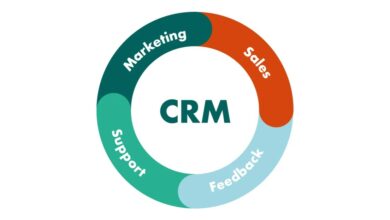
Customer Relationship Management (CRM) Systems
CRMs are essential for managing interactions with current and potential clients. They centralize data, track sales pipelines, and improve customer service.
- Salesforce, HubSpot, and Zoho are leading platforms in the space.
- Integration with email, calendar, and marketing tools enhances productivity.
- Analytics provide insights into customer behavior and sales performance.
According to Salesforce, high-performing sales teams are 2.3x more likely to use CRM effectively.
Marketing Automation Tools
Automation allows B2B companies to scale their outreach without sacrificing personalization. These tools handle repetitive tasks like email campaigns, lead scoring, and social media posting.
- Platforms like Marketo and Pardot enable drip campaigns based on user behavior.
- Lead scoring helps prioritize high-intent prospects for sales follow-up.
- Multi-channel automation ensures consistent messaging across touchpoints.
Automation can reduce manual workload by up to 40%, according to HubSpot’s State of Marketing Report.
Artificial Intelligence and Predictive Analytics
AI is revolutionizing B2B operations by enabling smarter decision-making. From chatbots to forecasting, intelligent systems are becoming indispensable.
- AI-powered chatbots handle initial customer inquiries 24/7.
- Predictive analytics forecast sales trends and customer churn.
- Natural language processing (NLP) analyzes customer feedback at scale.
Companies like IBM Watson and Google AI offer enterprise-grade solutions for B2B integration.
Challenges Facing B2B Companies Today
Despite their importance, B2B companies face numerous challenges in an evolving marketplace. From economic uncertainty to digital disruption, staying competitive requires constant adaptation.
Economic Volatility and Supply Chain Disruptions
Global events like pandemics, geopolitical tensions, and inflation impact B2B operations significantly. Supply chain delays can halt production, while rising costs squeeze margins.
- 75% of companies experienced supply chain disruptions in 2023 (McKinsey).
- Diversifying suppliers and investing in logistics tech can mitigate risks.
- Flexible pricing models help maintain client relationships during downturns.
For example, semiconductor shortages affected automakers and electronics manufacturers worldwide, highlighting the fragility of global supply networks.
Digital Transformation Pressure
Customers now expect seamless digital experiences, even in B2B. Companies that fail to modernize risk losing market share to more agile competitors.
- Legacy systems hinder integration with modern tools.
- Employees may resist change due to lack of training.
- Security concerns slow cloud adoption in regulated industries.
A study by IBM found that 60% of executives cite culture as the biggest barrier to digital transformation.
Intense Competition and Market Saturation
Many B2B markets are crowded, making differentiation difficult. Whether it’s CRM software or logistics services, standing out requires more than just a good product.
- Unique value propositions (UVPs) must be clearly communicated.
- Customer experience is becoming a key differentiator.
- Innovation cycles must accelerate to stay ahead.
For instance, the rise of no-code platforms has intensified competition among SaaS providers, forcing incumbents to innovate faster.
Future Trends Shaping the Evolution of B2B Companies
The future of B2B is being shaped by technological advances, changing buyer expectations, and new business models. Companies that anticipate these shifts will be best positioned for long-term success.
Rise of E-Procurement and Digital Marketplaces
More businesses are moving procurement online, using digital marketplaces to compare vendors, negotiate prices, and place orders.
- Platforms like Alibaba Business and ThomasNet connect buyers with global suppliers.
- E-procurement systems streamline purchasing workflows and improve transparency.
- AI-driven recommendations help buyers discover new vendors.
This shift increases competition but also opens new distribution channels for B2B companies.
Increased Focus on Sustainability and ESG
Environmental, Social, and Governance (ESG) factors are becoming critical in B2B decision-making. Buyers prefer partners who align with their sustainability goals.
- Companies are reducing carbon footprints in logistics and manufacturing.
- Transparent reporting on ethical sourcing is expected.
- Sustainable packaging and energy-efficient operations are differentiators.
A McKinsey survey revealed that 70% of B2B buyers consider sustainability when choosing suppliers.
Hyper-Personalization Through Data and AI
The next frontier in B2B marketing is hyper-personalization—delivering the right message, to the right person, at the right time, based on deep data insights.
- AI analyzes behavioral data to predict buyer intent.
- Dynamic content adjusts messaging in real-time.
- Personalized pricing and offers increase conversion rates.
Companies like Netflix and Amazon have mastered this in B2C; B2B is catching up fast.
What defines a B2B company?
A B2B company sells products or services to other businesses rather than individual consumers. Examples include software providers, manufacturers, and consulting firms. The focus is on solving business problems, often through long-term contracts and relationship-based sales.
How do B2B companies differ from B2C companies?
B2B companies typically have longer sales cycles, higher transaction values, and more complex decision-making processes involving multiple stakeholders. Marketing is more educational and relationship-focused, while B2C emphasizes emotion and impulse buying.
What are the most effective marketing strategies for B2B companies?
The most effective strategies include content marketing, SEO, account-based marketing (ABM), and thought leadership. Building trust through valuable content and personalized engagement is key to converting high-value leads.
Why is CRM important for B2B companies?
CRM systems help B2B companies manage customer interactions, track sales pipelines, and improve retention. They centralize data, enable automation, and provide insights that drive better decision-making across sales and marketing teams.
What role does AI play in B2B companies?
AI enhances B2B operations through predictive analytics, chatbots, lead scoring, and personalized marketing. It helps automate repetitive tasks, improve customer service, and forecast trends, enabling companies to operate more efficiently and effectively.
In conclusion, B2B companies are the backbone of the global economy, driving innovation, efficiency, and growth across industries. From understanding their core models to leveraging cutting-edge technology, success in this space requires a strategic, customer-centric approach. By embracing digital transformation, focusing on sustainability, and mastering modern marketing techniques, B2B organizations can not only survive but thrive in an increasingly competitive landscape. The future belongs to those who adapt, innovate, and deliver exceptional value—every step of the way.
Further Reading: