If you’ve ever wondered what makes a B2B business thrive while others stall, you’re not alone. In this deep dive, we uncover the real mechanics behind successful B2B operations—from strategy to sales, technology to trust.





What Exactly Is a B2B Business?

The term B2B business—short for business-to-business—refers to companies that sell products or services to other businesses, rather than to individual consumers (which would be B2C). This model is the backbone of global commerce, powering everything from raw material suppliers to enterprise software providers.
Defining B2B vs. B2C
While B2C transactions are often quick and emotionally driven, B2B business decisions are typically longer, more complex, and based on logic, ROI, and long-term value. A consumer might buy a coffee maker on impulse; a business buying industrial kitchen equipment will involve multiple stakeholders, contracts, and months of evaluation.
- B2B: Multiple decision-makers, longer sales cycles, higher transaction values
- B2C: Individual buyers, emotional triggers, faster purchases
- Hybrid models (e.g., SaaS tools for freelancers) blur the lines but still lean toward B2B if the primary customer is a professional entity
“B2B is not just about selling to businesses—it’s about solving their problems at scale.” — Marc Benioff, CEO of Salesforce
Common Examples of B2B Businesses
B2B spans nearly every industry. Some prominent examples include:
- Manufacturers selling components to other manufacturers (e.g., Intel selling chips to Dell)
- Software-as-a-Service (SaaS) platforms like Salesforce or Microsoft 365 used by enterprises
- Consulting firms providing legal, financial, or marketing services to corporations
- Wholesale distributors supplying goods to retailers
These businesses don’t just sell products—they build partnerships, offer support, and integrate into their clients’ operations.
Why B2B Business Models Dominate Global Trade
The B2B business model accounts for over 80% of all commercial transactions worldwide. Its dominance stems from the interconnected nature of modern economies, where no company operates in isolation.
Scale and Revenue Potential
One of the biggest advantages of a B2B business is the potential for high-value contracts. A single enterprise client can generate millions in annual revenue. For example, a cybersecurity firm signing a three-year contract with a Fortune 500 company could secure $10M+ in recurring revenue.
- Larger deal sizes compared to B2C
- Longer customer lifecycles due to integration depth
- Higher margins in specialized niches (e.g., industrial automation)
This scalability makes B2B an attractive space for investors and entrepreneurs alike.
Stability Through Relationships
Unlike B2C markets, which can be volatile due to trends and consumer sentiment, B2B thrives on long-term relationships. Contracts, service level agreements (SLAs), and ongoing support create stickiness that reduces churn.
- Client retention rates in B2B average 76%, compared to 63% in B2C (Source: Cleverly)
- Referrals and word-of-mouth are powerful—especially in niche industries
- Trust is built over time through consistent delivery and problem-solving
“In B2B, you’re not just selling a product—you’re selling peace of mind.” — Unknown
Key Characteristics of a Successful B2B Business
Not all B2B companies succeed. The ones that do share common traits that set them apart. Understanding these characteristics is crucial for anyone looking to enter or grow in the B2B space.
Complex Sales Cycles and Decision-Making Units
In a typical B2B business, the sales cycle can last anywhere from 30 days to over a year. This is because multiple stakeholders—such as procurement officers, technical evaluators, finance teams, and C-suite executives—must approve the purchase.
- Sales processes often involve demos, proof-of-concept trials, and legal reviews
- Content marketing plays a key role in educating decision-makers at each stage
- CRM systems like Zoho CRM help track interactions across departments
Understanding the buyer’s journey is essential. Tools like buyer personas and sales funnel mapping can significantly improve conversion rates.
Value-Driven, Not Price-Driven
While price matters, B2B buyers are more concerned with value: How will this product or service improve efficiency, reduce costs, or drive growth?
- ROI calculators and case studies are effective tools in demonstrating value
- Customization and integration capabilities increase perceived worth
- Post-sale support and training enhance long-term satisfaction
For instance, a company might pay a premium for a cloud infrastructure provider that guarantees 99.99% uptime, knowing downtime could cost millions per hour.
Top 7 Strategies to Grow Your B2B Business
Growing a B2B business isn’t about luck—it’s about strategy. Here are seven proven approaches used by industry leaders to scale their operations and dominate their markets.
1. Master Account-Based Marketing (ABM)
ABM flips traditional marketing on its head. Instead of casting a wide net, you target specific high-value accounts with personalized campaigns.
- Identify ideal customer profiles (ICPs) based on industry, size, and pain points
- Create tailored content, emails, and ads for each account
- Align sales and marketing teams to engage key stakeholders
According to ABM Leadership Alliance, companies using ABM report 208% higher ROI than those using traditional methods.
2. Build a Content Engine That Educates
B2B buyers are researchers. They consume an average of 13 pieces of content before making a decision. Your content must guide them through each stage of the funnel.
- Top of funnel: Blog posts, infographics, and social media content to raise awareness
- Middle of funnel: Whitepapers, webinars, and case studies to nurture leads
- Bottom of funnel: Product demos, ROI calculators, and testimonials to close deals
HubSpot, a leader in B2B marketing, generates over 6 million monthly visitors through its content engine—most of whom become leads.
3. Leverage Data and Analytics
In the digital age, data is the new currency. Successful B2B businesses use analytics to understand customer behavior, optimize campaigns, and forecast trends.
- Track KPIs like customer acquisition cost (CAC), lifetime value (LTV), and churn rate
- Use tools like Google Analytics, Mixpanel, or Tableau for deep insights
- Implement predictive analytics to anticipate client needs
For example, a SaaS company might analyze user engagement data to identify at-risk customers and proactively offer support.
4. Invest in Customer Success
Unlike B2C, where the sale is often the end goal, in B2B business, the sale is just the beginning. Customer success ensures clients achieve their desired outcomes, leading to renewals and upsells.
- Assign dedicated customer success managers (CSMs)
- Offer onboarding programs and ongoing training
- Collect feedback and act on it quickly
Companies with strong customer success teams see up to 30% higher retention rates.
5. Expand Through Strategic Partnerships
No B2B business operates in a vacuum. Strategic alliances—such as technology integrations, reseller agreements, or co-marketing initiatives—can accelerate growth.
- Partner with complementary vendors (e.g., a CRM company partnering with an email marketing platform)
- Join industry consortia or cloud marketplaces like AWS Marketplace
- Co-host events or publish joint research reports
Salesforce’s AppExchange ecosystem, with over 5,000 partner apps, is a prime example of partnership-driven expansion.
6. Optimize Your Sales Funnel
A well-structured sales funnel eliminates bottlenecks and improves conversion rates. Map out every stage—from lead generation to post-sale support—and continuously refine it.
- Use lead scoring to prioritize high-intent prospects
- Automate follow-ups with email sequences and chatbots
- Conduct regular sales training and role-playing exercises
Tools like Pipedrive or HubSpot Sales Hub help streamline the process.
7. Embrace Digital Transformation
From AI-powered chatbots to cloud-based collaboration tools, digital transformation is no longer optional. B2B businesses that adopt new technologies gain a competitive edge.
- Implement AI for lead qualification and customer service
- Use automation to reduce manual tasks in sales and marketing
- Adopt remote collaboration tools to support distributed teams
A study by McKinsey found that digitally mature B2B companies grow revenue 2.5x faster than their peers.
The Role of Technology in Modern B2B Business
Technology isn’t just a tool—it’s a strategic enabler in the B2B landscape. From communication to analytics, digital tools are reshaping how B2B companies operate and compete.
CRM Systems: The Backbone of B2B Sales
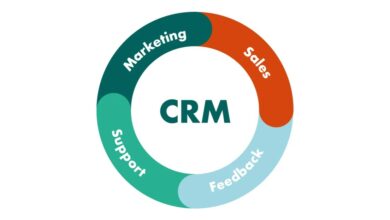
Customer Relationship Management (CRM) platforms like Salesforce, Zoho CRM, and Microsoft Dynamics 365 centralize customer data, track interactions, and automate workflows.
- CRMs help sales teams manage pipelines and forecast revenue
- Marketing teams use them to segment audiences and personalize campaigns
- Customer service teams access client history for faster resolution
Without a CRM, scaling a B2B business becomes chaotic and inefficient.
Marketing Automation Platforms
Manual outreach doesn’t scale. Marketing automation tools like HubSpot, Marketo, and ActiveCampaign allow B2B businesses to nurture leads at scale.
- Automated email sequences guide prospects through the funnel
- Behavioral triggers send personalized messages based on user actions
- A/B testing optimizes subject lines, CTAs, and content
These platforms reduce workload while increasing engagement and conversion rates.
AI and Machine Learning in B2B
Artificial Intelligence is no longer science fiction. In B2B business, AI is used for lead scoring, chatbots, predictive analytics, and even contract analysis.
- AI-powered tools like Gong analyze sales calls to improve performance
- Chatbots handle initial inquiries, freeing up human agents for complex issues
- Predictive models forecast which leads are most likely to convert
Early adopters of AI report up to 50% faster sales cycles and 30% higher win rates.
Challenges Facing B2B Businesses Today
Despite its advantages, the B2B business landscape is not without challenges. From economic uncertainty to digital disruption, companies must navigate a complex environment.
Longer Sales Cycles and Buyer Skepticism
Modern B2B buyers are more informed—and more cautious—than ever. They delay decisions, demand proof, and expect transparency.
- Over 60% of buyers say they prefer to research independently before speaking to a sales rep (Source: Gartner)
- Sales teams must adapt by providing value upfront, not just pitching
- Content, social proof, and free trials help overcome skepticism
The key is to become a trusted advisor, not just a vendor.
Competition and Market Saturation
In many B2B sectors—especially SaaS—competition is fierce. Differentiating your offering is critical.
- Focus on niche markets or underserved industries
- Highlight unique features, superior support, or better pricing models
- Build a strong brand identity through thought leadership
Companies that fail to differentiate risk becoming commoditized.
Data Privacy and Security Concerns
With increasing regulations like GDPR and CCPA, B2B businesses must ensure compliance and protect client data.
- Implement robust cybersecurity measures (e.g., encryption, multi-factor authentication)
- Conduct regular audits and employee training
- Be transparent about data usage in contracts and privacy policies
A single data breach can destroy trust and lead to massive financial and reputational damage.
Future Trends Shaping the B2B Business Landscape
The future of B2B business is being shaped by technological innovation, changing buyer expectations, and global economic shifts. Staying ahead requires foresight and agility.
Rise of Self-Service and Digital Buying
More B2B buyers now expect the same ease of purchase they experience in B2C. Self-service portals, online demos, and instant onboarding are becoming standard.
- Companies like Slack and Zoom grew rapidly by offering frictionless sign-up and free trials
- E-commerce platforms for B2B, such as Alibaba and Faire, are gaining traction
- Buyers want to control the process without pressure from sales reps
B2B businesses must adapt by building intuitive digital experiences.
Hyper-Personalization Through AI
Generic messaging no longer works. Buyers expect personalized content, pricing, and recommendations based on their industry, size, and behavior.
- AI analyzes past interactions to predict what a client needs next
- Dynamic websites show tailored content to different visitor segments
- Email campaigns use real-time data to adjust messaging
Personalization can increase conversion rates by up to 20%, according to Boston Consulting Group.
Sustainability and Ethical Sourcing
Corporate responsibility is no longer optional. B2B buyers increasingly favor suppliers with sustainable practices and ethical standards.
- Companies are demanding carbon footprint reports from vendors
- Supply chain transparency is a growing expectation
- Sustainability can be a key differentiator in RFPs (Request for Proposals)
B2B businesses that embrace ESG (Environmental, Social, Governance) principles will gain a competitive advantage.
What is the difference between B2B and B2C?
B2B (business-to-business) involves companies selling to other businesses, with longer sales cycles, multiple decision-makers, and a focus on ROI. B2C (business-to-consumer) targets individual customers, with shorter, emotion-driven purchases and simpler decision processes.
How long is the average B2B sales cycle?
The average B2B sales cycle ranges from 30 to 180 days, depending on the industry and deal complexity. High-value SaaS or enterprise software deals can take over a year to close.
What are the most effective marketing strategies for B2B?
The most effective B2B marketing strategies include account-based marketing (ABM), content marketing, SEO, LinkedIn outreach, email nurturing, and customer referrals. Educational content and thought leadership are particularly powerful.
Why is customer success important in B2B?
Customer success ensures clients achieve their goals using your product or service, leading to renewals, upsells, and referrals. In B2B, where contracts are long-term, ongoing value delivery is critical to retention.
Can a B2B business operate without a CRM?
While possible in the early stages, scaling a B2B business without a CRM is extremely difficult. A CRM centralizes customer data, streamlines communication, and improves sales efficiency—making it essential for growth.
Running a successful B2B business requires more than just a great product. It demands a deep understanding of buyer behavior, a strategic approach to marketing and sales, and a commitment to long-term value creation. From leveraging technology to building trust and adapting to future trends, the most successful B2B companies are those that stay agile, customer-centric, and innovative. Whether you’re launching a startup or scaling an established firm, focusing on these core principles will set you on the path to sustainable growth.
Further Reading: